


To read our full disclaimer, click here.
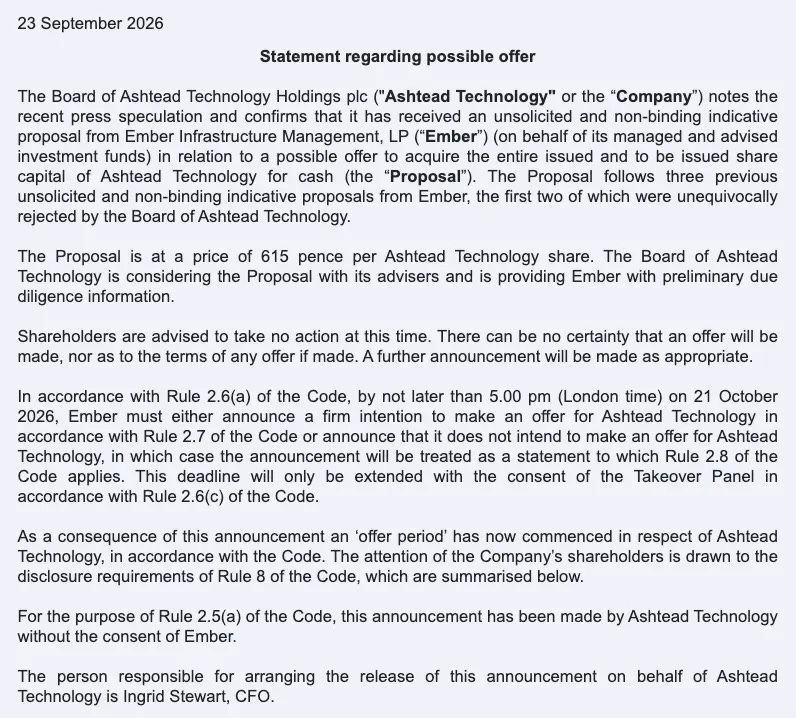
At 4:14pm on Wednesday 23 September, Ashtead Technology (AIM: AT.) confirmed it had received a takeover proposal.
615p a share, in cash, from Ember Infrastructure, a New York private equity firm.
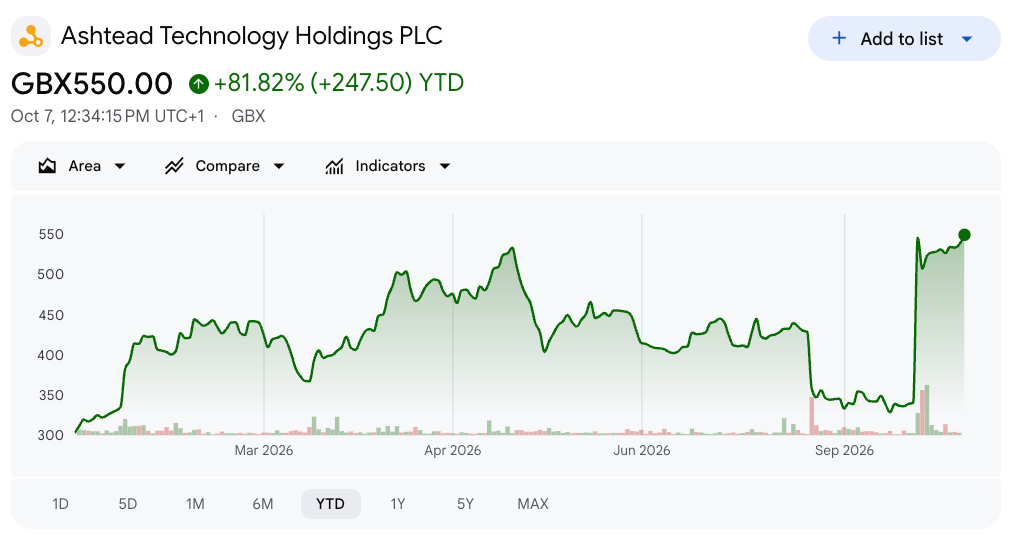
The shares had closed at 340p the day before. They finished that Wednesday at 545p, almost all of the move coming in the last few minutes of trading. As I write, they’re at 555p, about 11% below Ember’s proposal.
Full disclosure: Ashtead is the largest position in the Schwar Capital Research portfolio. I’m planning to trim it before Ember’s deadline. It’s how I manage size and risk, and it doesn’t change how I see the business. The reasoning is further down.
Since the bid, one shareholder has gone public urging the board to reject it, and the board’s own behaviour has given me something new to think about.
What the Announcement Actually Says
This is Ember’s fourth approach. The board “unequivocally rejected” the first two. The announcement doesn’t say what happened to the third, but Ember came back again, and this time the board is “considering the proposal with its advisers” and has started giving Ember preliminary due diligence information.
That’s a big shift. A board that has twice said no in the strongest terms available doesn’t open its books to a bidder unless it thinks the price is somewhere close to acceptable.
The proposal is still non-binding. Under the Takeover Code, Ember has until 5pm on 21 October to either make a firm offer or walk away. That deadline can be extended, and often is.
At 615p, Ember would be paying about £498 million for the equity.
How We Got Here
In March, Ashtead reported full-year 2025 results ahead of expectations (I covered them here): revenue up 21% to £203 million, adjusted EPS of 49.4p, and returns on capital above 22%. The shares were around 400p, roughly 8x earnings. By May they had run to around 530p.
Then the conflict in the Middle East arrived.
A July trading update flagged project delays. On 20 August the company warned that 2026 revenue would come in about 5% below expectations and profit about 15% below, as Middle East work was pushed into 2027.
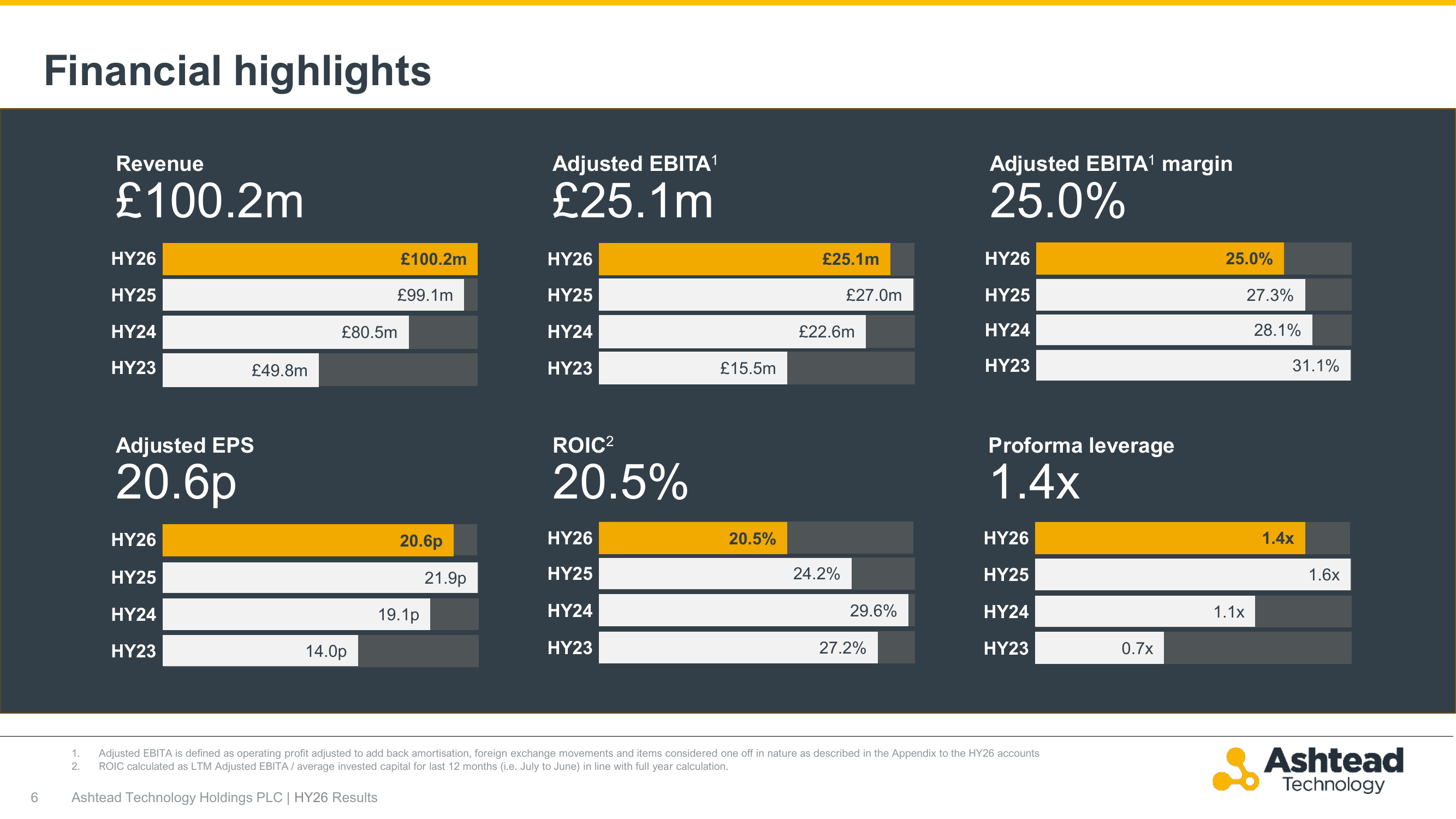
By 1 September, the day of the half-year results, the shares were down to 326p. The results showed revenue up just 1.1%, with margins lower.
I held through all of it.
In my view the business hadn’t broken. Work had been delayed, and delayed work tends to come back in a business like this.
That’s the moment Ember chose. A business with a strong long-term record, its shares down almost 40% from the May high, in the one year its growth had stalled.
At 615p, Ember is offering about 13x consensus 2027 earnings, for a stock that spent most of this year at 7 to 9x. It’s also about 40% above the roughly 440p the shares traded at before the August warning, which is close to a standard takeover premium on the pre-warning price. Ember is pricing the business as if the delays never happened, and adding the usual premium for control on top.
The Shareholder Who Wants the Board to Say No
On 30 September, Sun Mountain Partners, a Boston investment firm that owns about 1.4% of Ashtead’s shares, published a letter it had sent to the board urging it to reject Ember’s proposal.
Its case rests on three points:
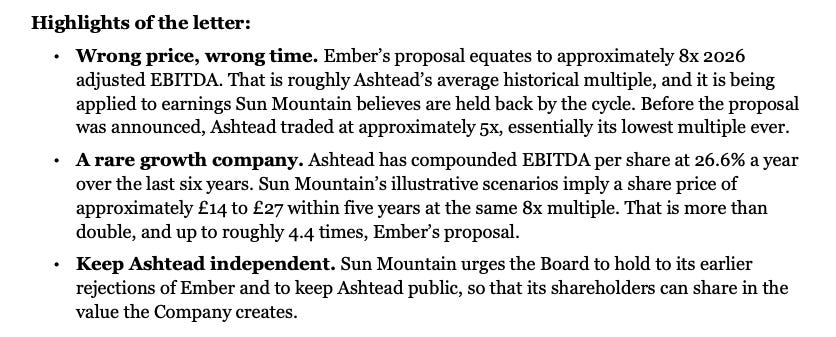
Its portfolio manager, Christian Solberg, called selling at 615p “a giveaway of its great future to a private buyer.”
Parts of this go too far for me.
The six-year window starts around 2020, when offshore activity was close to its lows, and a large share of the growth since then came from debt-funded acquisitions.
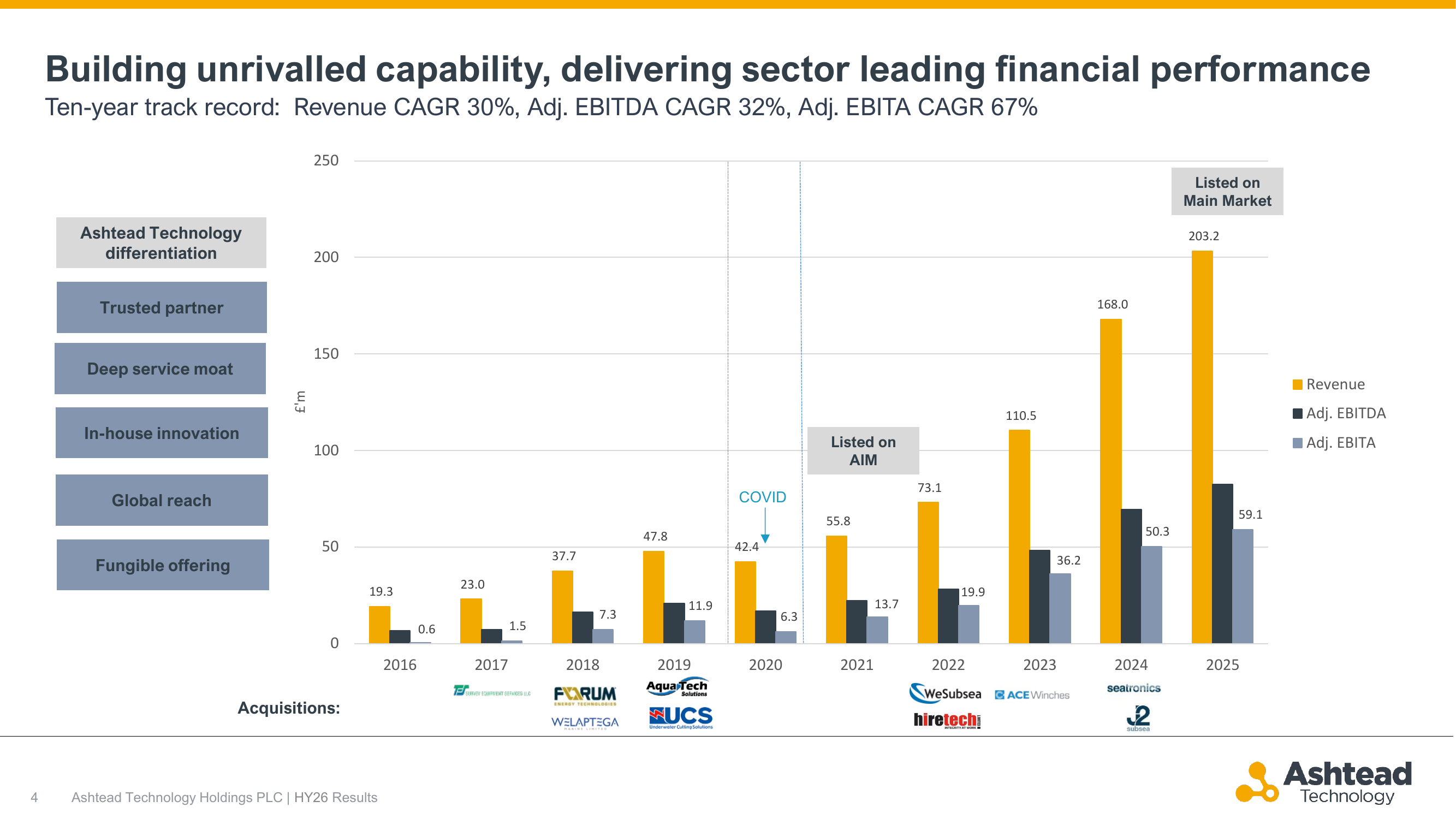
Projecting 26.6% a year forward from a base that is now several times larger is extrapolating a great past into the future, and the top of that range depends on it.
But the core of the argument is valid.
Ember is buying a high-return business at the bottom of its cycle, on an average multiple of depressed earnings. If the delayed work comes back in 2027, the recovery belongs to Ember.
In my view, Ember is getting a very good deal.
Why Would a Board Sell at the Bottom?
This board turned Ember down twice, unequivocally.
It is now engaging at a moment when its own share price is close to its low for the year, and on a year of earnings everyone agrees is below the company’s potential.
There are good reasons a board might do that.
An 81% premium to the undisturbed price is hard to turn down on behalf of shareholders, and directors have a duty to take a serious offer seriously.
But there’s another way to read it.
The people with the best view of the order book, the customer conversations and the 2027 pipeline have looked at the same recovery Sun Mountain is describing, and they’ve decided that 615p in cash today is worth engaging with. That may simply be a fair price for certainty. It may also say something about how confident management is in running this business through the next couple of years in public, quarter by quarter, with the market watching.
I don’t know which it is.
It’s the first time in my ownership that the people running Ashtead have signalled a price at which they’d consider handing it over, and I’m weighing that.