


To read our full disclaimer, click here.
On the night of 28 December 1879, a storm came down the Firth of Tay.
At around quarter past seven, a train bound for Dundee started across the new Tay Bridge, at the time one of the longest bridges in the world. It never reached the other side. The high girders in the middle of the bridge collapsed into the river, taking the train and everyone on it with them. Fifty-nine victims are known by name. Estimates of the true number run as high as seventy-five.
The bridge had been open for nineteen months. Its engineer, Thomas Bouch, had been knighted for it.
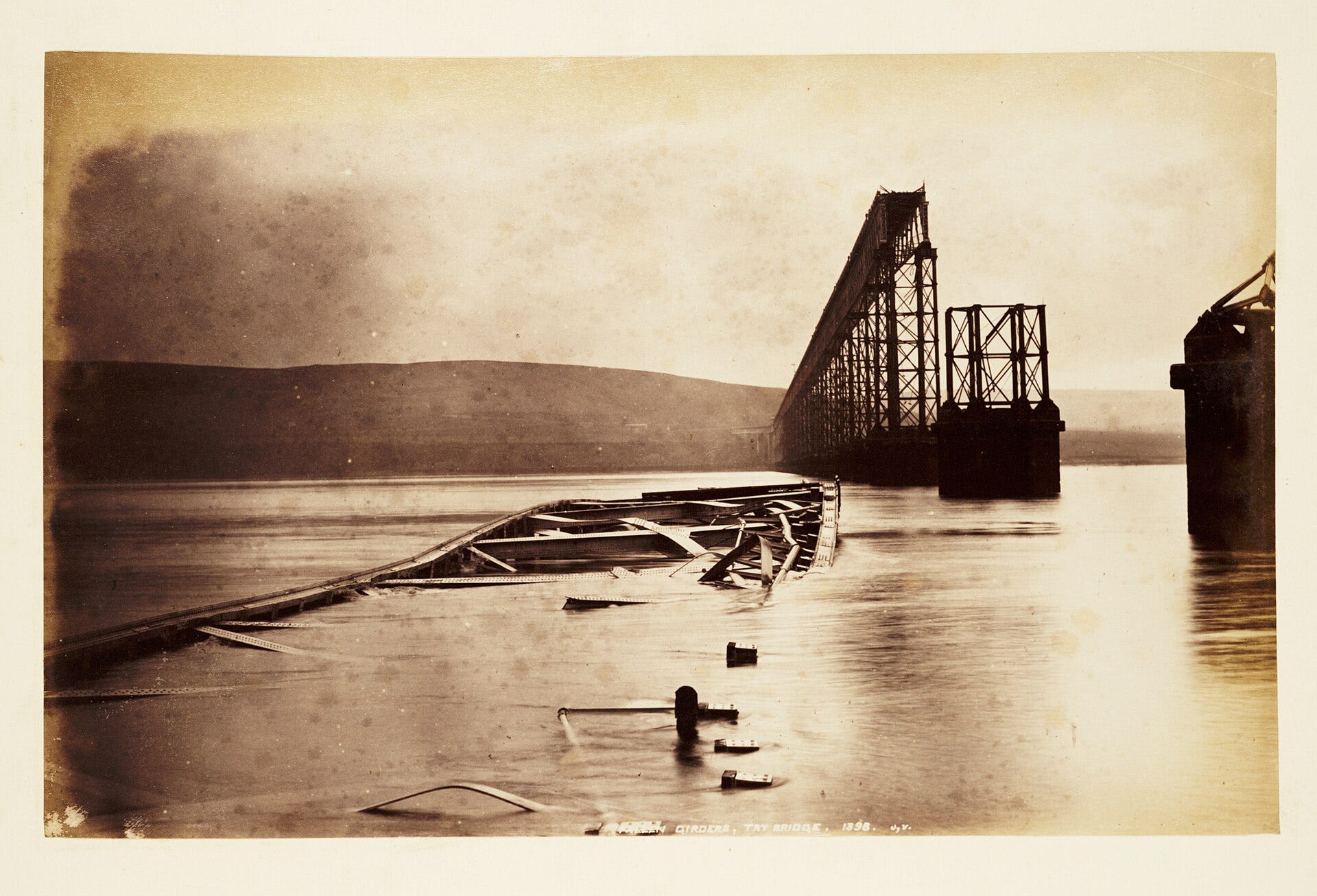
The Court of Inquiry that followed reached a verdict that’s been quoted in engineering schools ever since: the bridge was badly designed, badly constructed and badly maintained.
I’ve been reading about the Tay disaster, and the engineering that came after it, for a reason that has nothing to do with railways.
The most famous idea in investing, Benjamin Graham’s margin of safety, is borrowed from engineering.
Every value investor quotes it. Most define it the same way:
Buy a stock for less than it’s worth, and the bigger the discount, the safer you are.
That definition isn’t wrong.
But having spent the last few weeks with Graham’s original chapter, Seth Klarman’s book on the subject, and a surprising amount of Victorian engineering history, I’m convinced it’s only a third of the idea. Engineers don’t just ask “is there a margin?” They have a precise way of deciding how much margin is enough, where it needs to sit, and what it costs. Graham’s original version is much closer to that than the one we repeat today.
This is the first post in a new series, Misunderstood, where I take one of investing’s most quoted ideas back to its original source and set out what it actually says. Margin of safety was the only place to start.
Here’s what we’ll cover:
How engineers size a margin of safety
What Graham actually wrote
The problem with a discount to a number you made up
Graham’s margin was a rate, not a snapshot
Designed, built, maintained: the three ways a margin fails
The Forth Bridge problem: what safety costs
One bridge or many
Let’s get into it…
How engineers size a margin of safety
Engineers call it the factor of safety: the ratio between the load a structure can actually bear and the load it’s expected to carry.
Warren Buffett made the same comparison in 1984, in his famous talk The Superinvestors of Graham-and-Doddsville:
“When you build a bridge, you insist it can carry 30,000 pounds, but you only drive 10,000 pound trucks across it. And that same principle works in investing.”
That bridge has a factor of three.
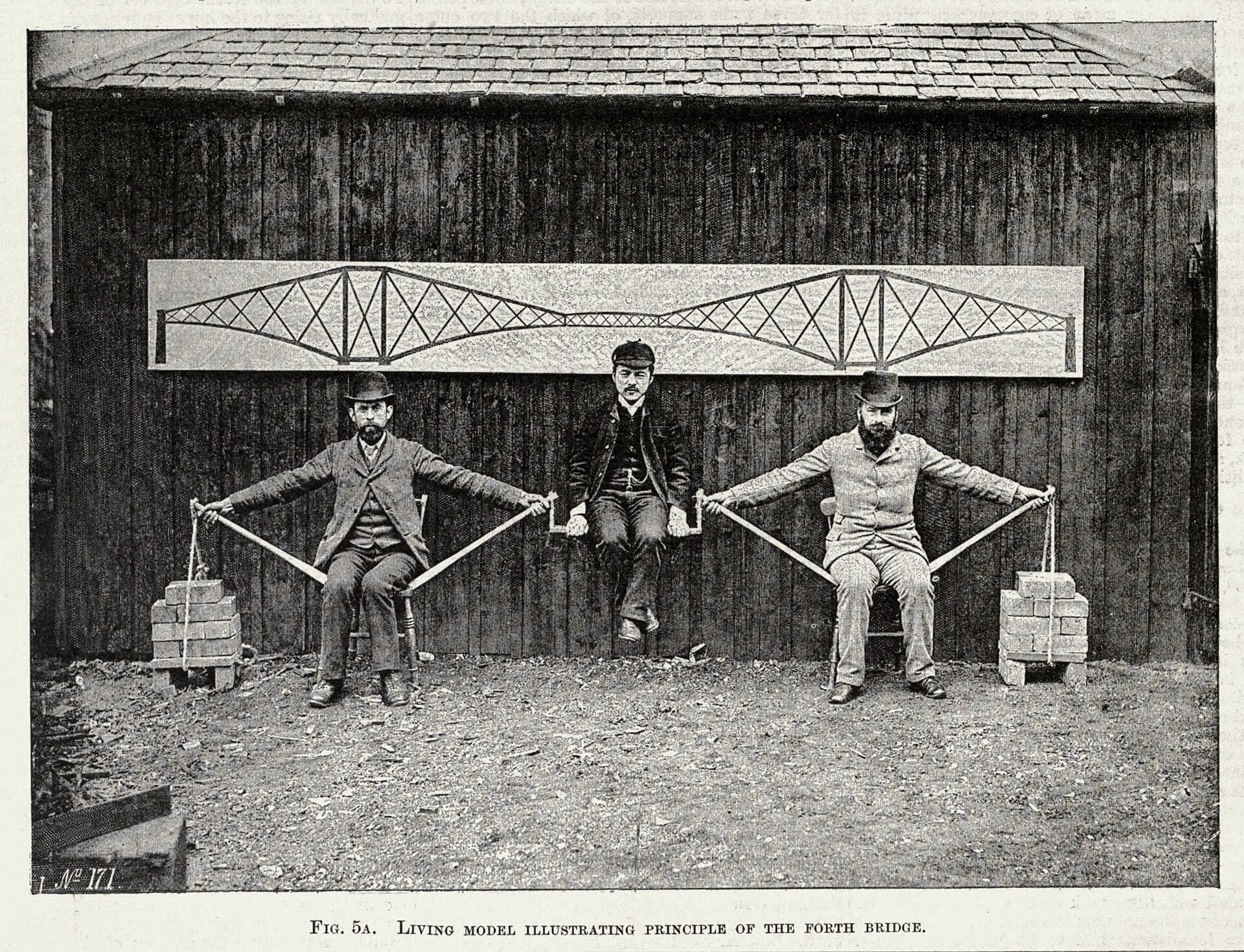
Engineers don’t pick this number out of the air, and they certainly don’t use the same number for everything.
Commercial aircraft are designed to a factor of safety of 1.5. It’s written into the US aviation regulations (FAR 25.303): the structure must withstand one and a half times the heaviest load it’s ever expected to meet. Lift cables, by contrast, are built with factors many times higher. After the Tay disaster, the Board of Trade told British bridge engineers to design for a wind pressure of 56 pounds per square foot, with a factor of safety of four on top.
Why would an aircraft, of all things, get less margin than a lift or a railway bridge?
Because the factor of safety is a judgement about three things:
How well you understand the loads. Aircraft loads have been measured, modelled and flight-tested to an extraordinary degree. The wind on a Scottish estuary in 1879 had not. The less you know about what a structure will face, the more margin it needs.
How bad failure would be. The more catastrophic and irreversible the failure, the more margin you demand.
What the margin costs. Every extra kilogram on an aircraft is weight it has to carry for its whole working life, paid for in fuel, range and payload. On a lift, extra steel is cheap.
An engineer never asks “is there a margin?” They ask how uncertain the loads are, how bad failure would be, and what the extra strength costs. The answers set the size of the margin.
Investing has exactly the same three questions. The popular version of margin of safety only answers the first.
What Graham actually wrote
Chapter 20 of The Intelligent Investor is titled “’Margin of Safety’ as the Central Concept of Investment”. It opens with one of the most famous lines in investing. Asked to distill the secret of sound investment into three words, Graham’s answer is:
Margin of safety.
What follows is far less famous, and it’s where all the interesting parts are.
He starts with bonds, not stocks. For a bond, the margin of safety was the gap between what a company earned and what it owed in interest. For a railroad bond, he wanted earnings of better than five times fixed charges. That excess was the cushion: profits could fall a very long way before the interest was in danger.
This is an engineer’s factor of safety in all but name. Capacity (earnings) divided by load (interest). A factor of five.
Then he turns to stocks:
“Assume in a typical case that the earning power is 9% on the price and that the bond rate is 4%; then the stockbuyer will have an average annual margin of 5% accruing in his favor.”
There’s no discounted cash flow in that. There’s no intrinsic value estimate with a percentage knocked off. Graham’s margin of safety for a stock was the difference between two yields: what the business earns on the price you pay, and what you could earn safely elsewhere. Over a decade, he reckoned that excess could add up to something like half the price paid.
Two more lines from the chapter matter for everything that follows. The first is what the margin is for:
“The function of the margin of safety is, in essence, that of rendering unnecessary an accurate estimate of the future.”
The second is what it does:
“The margin of safety guarantees only that he has a better chance for profit than for loss—not that loss is impossible.”
Put those passages together and you get something much richer than “buy at a discount.” Graham built his margin from earning power, not forecasts. It accrued over time. It was designed to work without an accurate view of the future. And it tilted the odds rather than removing risk.
The problem with a discount to a number you made up
Take a simple business earning £1 a share and paying all of it out to shareholders. I assume earnings grow 12% a year for ten years, discount the cash flows at 10%, and put fifteen times earnings on the business at the end of year ten.
The model says it’s worth about £29 a share.
The stock trades at £20. That’s a 31% discount to my estimate: by the popular definition, a healthy margin of safety.
Now change one input. Earnings grow at 6% a year instead of 12%. That’s hardly a disaster; plenty of perfectly decent businesses grow at 6%. Same model, same discount rate, same exit multiple.
The value falls to about £18.50.
The margin didn’t shrink. It disappeared, and the stock is now above what it’s worth. Nothing about the price protected me, because the whole cushion was sitting inside one assumption, and that assumption was the one that turned out to be wrong.
A valuation also rarely rests on one assumption.
Say my £29 needs four things to hold:
The growth rate
The margins
The exit multiple
Management not doing anything silly with the cash.
I’m 80% confident in each. The chance that all four hold is 0.8 × 0.8 × 0.8 × 0.8, which is 41%.
My “31% margin of safety” rests on something less likely than a coin toss.
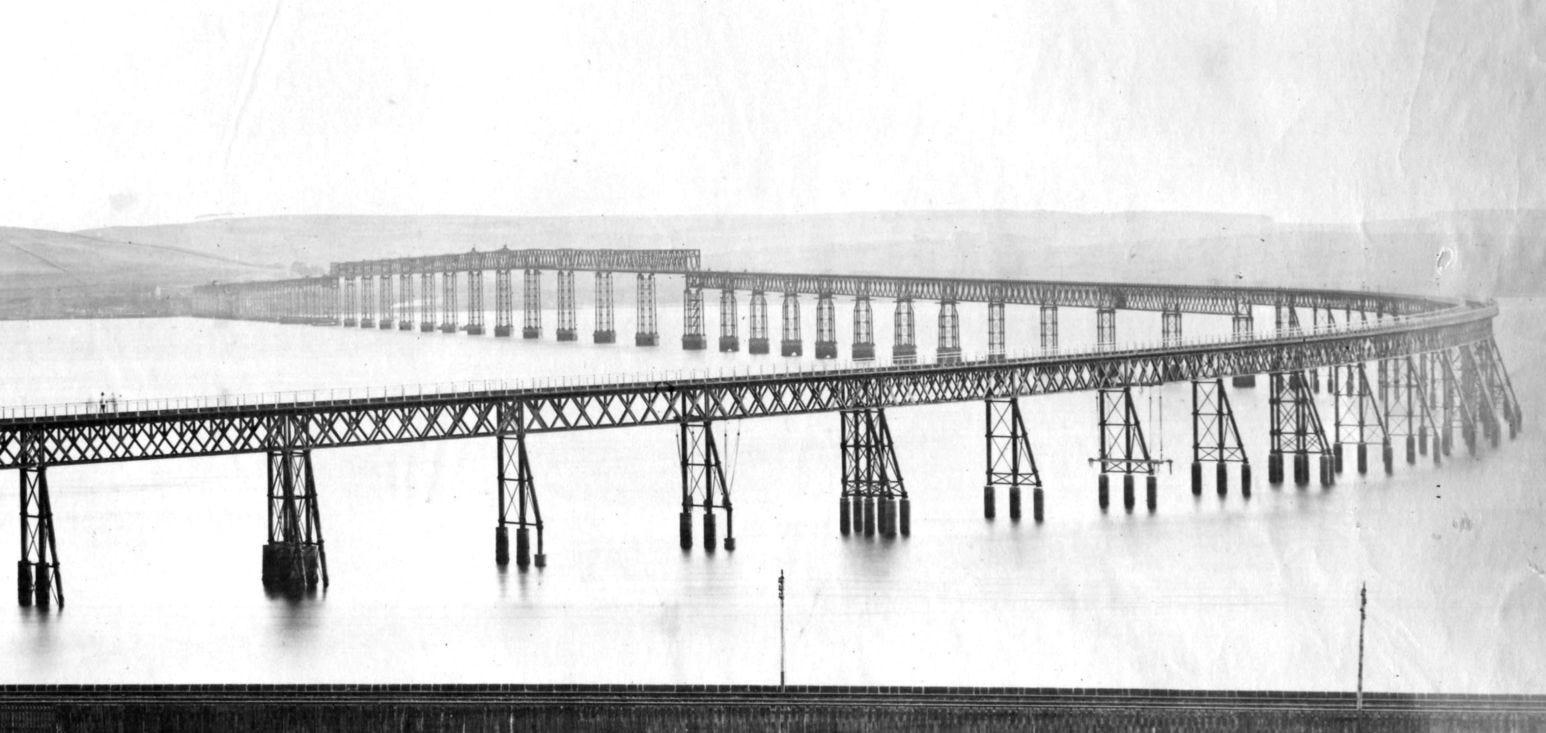
The Tay failed the same way.
Bouch’s design made no special allowance for wind pressure; the figure he had leaned on implied something like 10 pounds per square foot. By the standards of the calculation in front of him, the bridge was safe. The margin sat on top of an assumption about the load, and the load was the thing he’d got wrong. When the Board of Trade rewrote the rules, the wind allowance went up more than fivefold before a factor of safety of four was applied to it.
A factor of safety protects you from being wrong about how strong the structure is. It does very little if you’re wrong about the load.
That’s Graham’s line, “rendering unnecessary an accurate estimate of the future”, seen from the other side.
A true margin of safety doesn’t need the forecast to come true. A discount to a forecast is the forecast, with a reassuring label attached.
This is why Graham anchored the margin on demonstrated earning power (what a business had already shown it could earn) rather than what he expected it to earn.
He wasn’t against growth. But he was explicit that growth-stock buyers tend to swap expected earnings for the past record when they calculate their margin, and that the market has a habit of pricing growth at levels a conservative projection won’t protect.
The first question I now ask isn’t “how far below my valuation is the price?” It’s:
What is this worth if my most important assumption is wrong in the most likely direction?
If the price is below that number, I have a margin. If it’s only below my central case, I have a forecast.
Graham’s margin was a rate, not a snapshot
Go back to the 9% versus 4% passage and look at one word: accruing.
In Graham’s version, the margin of safety isn’t a gap you lock in on the day you buy. It builds, year after year, for as long as the business keeps earning more on your price than the safe alternative would pay. Five percent a year in your favour, for ten years, is a great deal of room to be wrong. But it only builds under two conditions.
The first is time.
An accruing margin needs the earning power to last. A business earning 9% on my purchase price for a decade builds a thick cushion. A business earning 9% on my price for one excellent year, then 3%, builds almost nothing, however cheap it looked on the day I bought.
This is why Graham wrote that the chief losses to investors come from the “purchase of low-quality securities at times of favorable business conditions.”
It’s the trap waiting for anyone who treats a low price-to-earnings ratio as a margin of safety.
A cyclical business at the top of its cycle almost always looks cheap, because the earnings in the ratio are the best it’s going to see. The multiple looks like a cushion. In reality, it’s a snapshot of a rate that’s about to fall.
The second is the comparator.
Graham didn’t measure the margin against zero. He measured it against the bond rate. The same business on the same 6% earnings yield carries a very different margin of safety when government bonds pay 1% than when they pay 4.5%. The business hasn’t changed at all. The margin has.
The “discount to intrinsic value” framing hides this completely. A 30% discount looks identical whatever interest rates are doing. Graham’s version doesn’t.
The second question I ask:
Is the gap between what this business earns on my price and what I could earn safely going to keep accruing, or am I buying one good year?
Designed, built, maintained: the three ways a margin fails
Go back to the Court of Inquiry’s verdict on the Tay: badly designed, badly constructed and badly maintained.
Those are three different failures.
Design: the engineer’s calculations didn’t allow for the loads the bridge would face.
Construction: the materials weren’t what the design assumed. The cast-iron lugs that held the cross-bracing to the columns were cast integrally with the columns. When they were tested after the disaster, they failed at loads far below what had been expected.
Maintenance: once the bridge was open, loosening ties weren’t properly reported or dealt with.
Any one of those can bring a bridge down, and a larger factor of safety on the drawings does nothing about the other two.
Seth Klarman, who wrote the book named after the idea, explains why investors need a margin of safety in a single sentence:
“A margin of safety is necessary because valuation is an imprecise art, the future is unpredictable, and investors are human and do make mistakes.”
I’d read that line many times before I noticed it describes three different errors, and that they line up almost perfectly with the Tay’s three failures. Each needs its own kind of buffer.
Valuation is an imprecise art → design → the buffer is price.
This is the part everyone knows: pay less than the business is worth. As we’ve just seen, though, it needs to be less than the conservative case, not the central one. A wide valuation range forces a lower price. A narrow one is usually a sign you’re fooling yourself.
The future is unpredictable → construction → the buffer is the business and the balance sheet.
Most investors underweight this buffer.
Net cash, low leverage, recurring revenue, pricing power, a product customers can’t easily do without. None of these make your forecast more accurate. What they do is buy time to be wrong without the business being forced into a bad decision. They are the quality of the steel, not the calculation.
Take two businesses, each with an enterprise value of £100m. One has no debt. The other has £50m of debt and £50m of equity. Something goes wrong and the underlying business value falls by 20% in both.
The first company’s shareholders lose 20%. The second company’s shareholders lose 40%. The debt doesn’t shrink, so every pound of the fall lands on the equity. Same business, same fall, twice the damage. And that’s before the lenders start setting the timetable.
A cheap share price on a stretched balance sheet is a bridge with a generous factor of safety on the drawings and weak lugs on the columns.
Investors are human → maintenance → the buffer is process.
This buffer has nothing to do with the company. It’s position size. For me, the size of a position should reflect how likely a permanent loss is, not how exciting the upside looks. A margin of safety applied to me rather than the stock.
It’s also deciding in advance what would change my mind, and writing it down before I buy, while I’m still objective, rather than after the price has fallen and I’m defending an idea I’ve grown attached to. Loosening ties are easy to spot on a bridge you’re inspecting every week. They’re very hard to see on one you’re emotionally invested in.
Klarman’s first error is the engineer’s first question: how well do you understand the loads? His second and third errors decide the engineer’s second question: how bad would failure be? Leverage, an oversized position, or a thesis you can’t let go of all turn a manageable mistake into an irreversible one.
The engineer’s third question, what the margin costs, is the one investors almost never ask.
The Forth Bridge problem: what safety costs
Bouch had also designed a suspension bridge to carry the railway across the Firth of Forth. After the Tay, that design was abandoned.
What replaced it was Sir John Fowler and Benjamin Baker’s great cantilever bridge, which opened in March 1890. It was designed for the new wind rules, it used around 53,000 tonnes of steel, and it cost about £3 million, an enormous sum at the time. It is one of the most recognisable structures in the world, still carrying trains more than 130 years later.
It’s also routinely described as one of the most over-engineered.
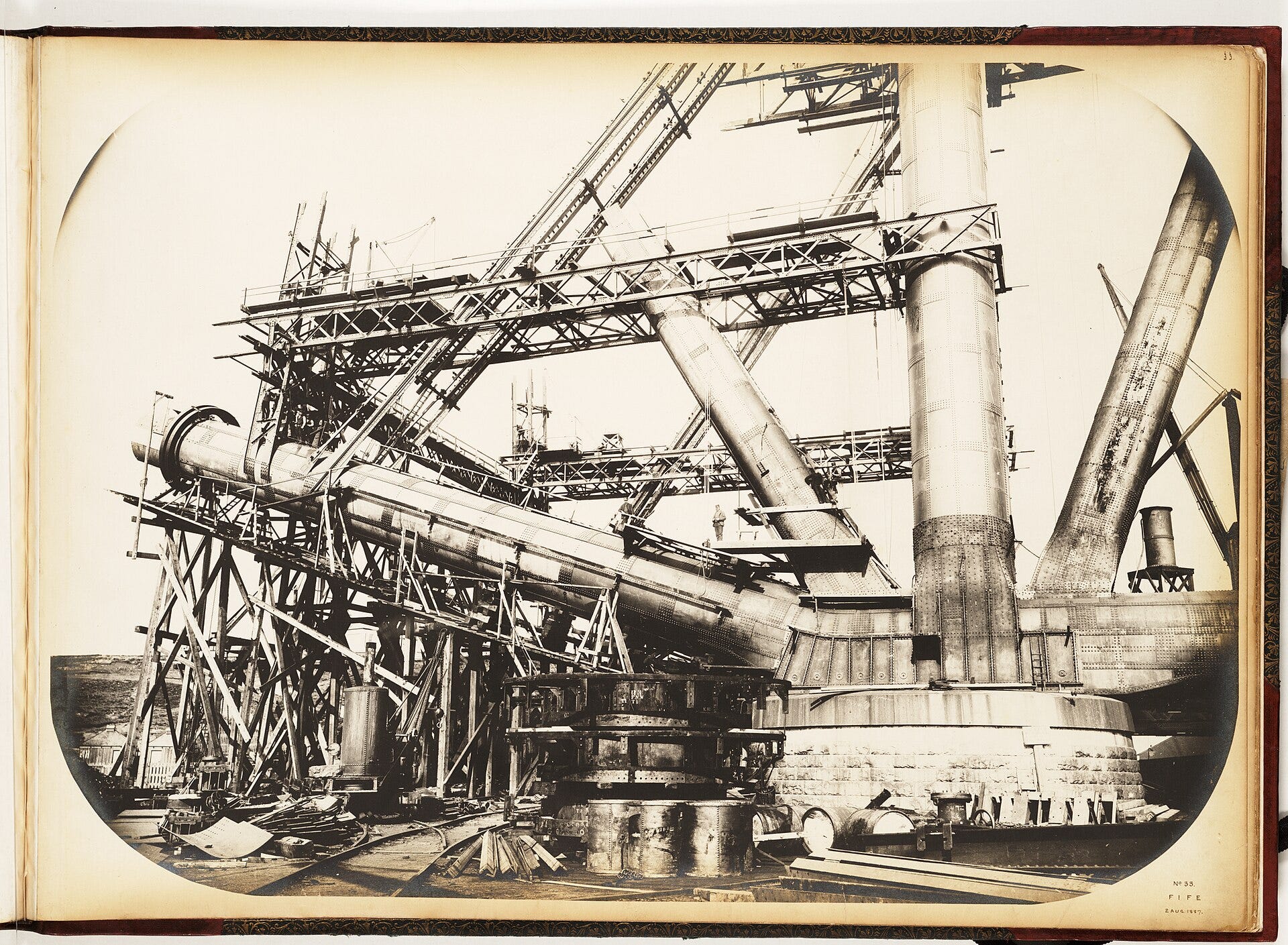
The Forth Bridge is the right answer to the Tay disaster. It’s also a reminder that margin of safety is never free.
For an engineer, the cost is weight, steel and money. For an investor, the cost is the great businesses you never own because they never got cheap enough, and the years spent in cash waiting for a price that never comes.
Those costs are real.
They just never show up on a statement. An investor who demands a 50% discount on everything will rarely lose money on the shares they buy. They’ll also rarely notice the compounders they passed on, because the mistake of not buying leaves no trace in a portfolio.
The error of omission is the most expensive mistake that nobody records.
After the Tay collapsed, the pendulum swung hard towards caution, and the next bridge was built to survive almost anything. Investors do the same after a crash.
The margin of safety they demand balloons at exactly the moment prices are offering the most of it. Engineers can afford an over-correction; the Forth Bridge still stands. An investor who over-corrects can miss the whole recovery.
So what about the truly exceptional business that never trades at fifty pence on the pound?
The aircraft engineers have the answer. When weight is expensive, they don’t abandon safety.
They move it.
The safety comes from understanding the loads better than anyone else does, from redundancy across many components, and from inspection regimes that catch cracks before they matter. The factor of safety on any one part is lower because the safety has been built somewhere else.
For a truly durable business, the margin can sit less in the price and more in the business itself: how predictable its demand is, how little capital it needs to grow, and how strong its balance sheet is.
Graham’s own framing allows for this. His margin was earning power relative to price, so a business that will reliably earn more, for longer, keeps building that accruing margin whether or not it looked cheap on day one.
But the catch is the same one the Tay teaches.
A lower factor of safety is only justified when you really understand the loads.
Aircraft designers can run at 1.5 because they have decades of flight data. For most businesses, most of the time, I don’t think investors understand their loads anywhere near as well as an engineer understands a wing.
The higher the price relative to what the business has already proven, the more confidence it’s quietly assuming.
One bridge or many
Straight after saying the margin only guarantees a better chance of profit than loss, Graham adds:
“But as the number of such commitments is increased the more certain does it become that the aggregate of the profits will exceed the aggregate of the losses.”
For Graham, margin of safety and diversification belonged together. Each position has a better-than-even chance of working out. Put enough of them together and the law of large numbers does the rest.
His margin was a property of the portfolio as much as of any single stock.
Engineers think this way too.
A structure with many redundant members can lose one without falling down. A structure that depends on a single member can’t afford for that member to fail.
This has an uncomfortable implication for concentrated investors, and I count myself as one.
With eight or ten positions, there aren’t enough bets for the averages to rescue a thin margin. Each position has to carry its own buffer. For a concentrated investor, the margin on any single name needs to be wider than Graham’s diversified version, not narrower. Fewer repetitions means less room for the odds to play out.
Most concentrated investors I read reason the opposite way: high conviction, so a smaller discount feels acceptable. The engineering says otherwise. Conviction tells you how confident you are. The margin of safety is there for the times that confidence turns out to be misplaced.
The Takeaway
Graham’s three-word motto has lasted because it’s so easy to repeat.
What it actually contains is a lot more demanding.
Engineers size their margins by how well they understand the loads, how bad failure would be, and what the extra strength costs. Graham built his from earning power rather than forecasts, measured it against the safe alternative, let it accrue over time, and relied on many positions to finish the job. And the Tay is a reminder that a generous calculation on paper protects nothing if the load was misjudged, the materials were weak, or no one was watching the ties.
These four questions sit in our own checklist whenever we think a position has a margin of safety:
If my key assumption is wrong in the most likely direction, is the price still below value? If not, I’m holding a forecast, not a margin.
Is the margin accruing? Is the business earning well above the safe alternative on my price, and will that last, or am I buying one good year at a low multiple?
Which of the three failures has no buffer? Price covers the design. The business and balance sheet cover the materials. Sizing and a written plan cover the maintenance. A position protected in only one of the three is far less safe than its discount suggests.
What is the margin costing me? If I’m demanding a margin so wide that nothing ever qualifies, that’s a cost too, even if it never appears in the returns.
The Tay Bridge was, by the calculations in front of its engineer, perfectly safe. A margin of safety is only ever as good as your understanding of what it’s protecting against.
Next time in Misunderstood: “be fearful when others are greedy”. It’s one of the most repeated lines Buffett ever wrote, and the 1986 letter it comes from says something far more modest, and far more useful, than the version on every dip-buyer’s lips.
Have a great week ahead,
Dom
Schwar Capital Research
Disclaimer: The content provided in this newsletter is for informational purposes only and does not constitute financial, investment, or other professional advice. The opinions expressed here are those of the author and do not necessarily reflect the views of Schwar Capital. Investing involves risk, including the possible loss of principal. Past performance is not indicative of future results. The author may or may not hold positions in the stocks or other financial instruments mentioned. Always do your own research or consult with a qualified financial advisor before making any investment decisions. You can see our full disclaimer here.