


To read our full disclaimer, click here.
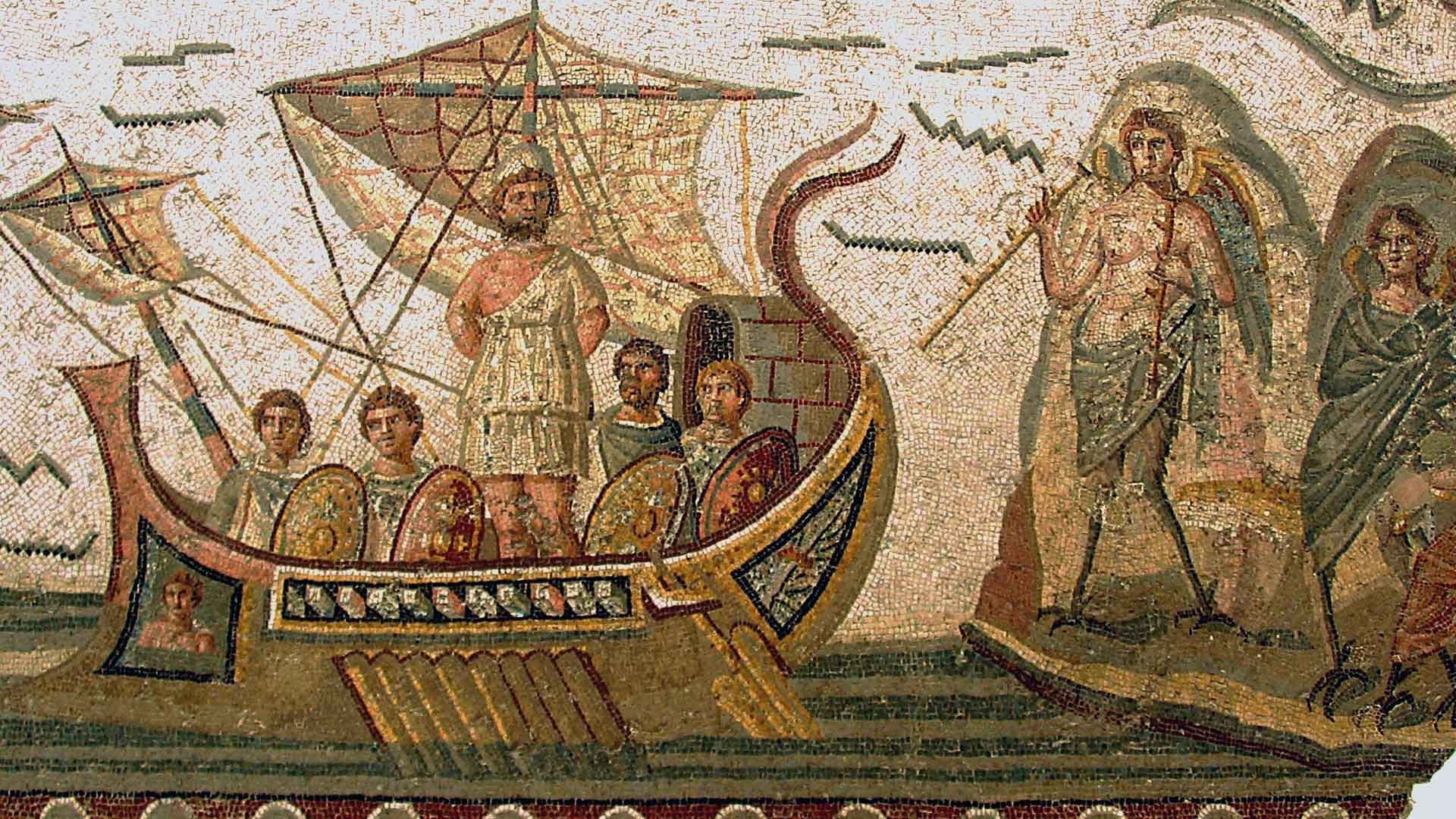
Christopher Nolan has just put Homer’s Odyssey on the big screen, and everyone is suddenly talking about a 3,000-year-old story about a very long journey home.
Which makes this the perfect time to revisit a talk Chuck Akre gave in Omaha in May 2011, at the 8th Annual Value Investor Conference, the day before Berkshire’s annual meeting.
He called it “An Investor’s Odyssey: The Search for Outstanding Investments.”
The title wasn’t an accident.
Akre started in the investment business in 1968 with a degree in English literature and, by his own account, no idea what he was doing.
It took him decades of wrong turns, strange encounters, and hard-won lessons to arrive at the framework that built one of the great long-term track records in American investing.
Odysseus took ten years to get home. Akre took about twenty.
The lessons he brought back are worth your time…
The Destination: Compounding
Every odyssey needs a destination. Akre is unusually clear about his.
He opens the talk with a question he says he puts to friends: which would you rather have - $750,000 today, or the outcome of a penny doubling every day for 30 days?
Most people say the penny, because they sense a trick. Almost nobody can say what the penny is actually worth: a little over $10.7 million.
That gap - between knowing compounding matters and understanding what it actually does - is, in Akre’s telling, where most investors live.
His firm’s entire stated goal is to compound clients’ capital at an above-average rate while incurring a below-average level of risk. Everything else in the talk hangs off that.
Two things sharpened his thinking early:
In 1972 he read “100 to 1 in the Stock Market” by Thomas Phelps, an analysis of stocks that had turned $1 into $100, and the characteristics they shared.
In 1977 he bought his first Berkshire Hathaway shares, at around $120. By the time of this talk they were a thousand-bagger.
Then he offers the hypothesis that quietly organises his whole approach:
One’s return from an asset will, over time, approximate the ROE, given the absence of any distributions and given a constant valuation.
Common stocks have returned roughly 10% a year across the 20th century.
The real return on the owner’s capital across American business, adjusted for what Akre calls “the accounting garbage”, sits in the low teens. He doesn’t think that’s a coincidence.
Over long periods, your return converges on the economics of the business you own.
So if the market averages 10% because the average business earns low-teens returns on capital, the way to beat it isn’t cleverness with entry and exit points. It’s owning businesses that earn far more than that - and holding on.
Which raises the obvious question: how do you find them?
The Three-Legged Stool
Akre’s answer is a visual construct his firm had used for years: an early 20th-century three-legged milking stool.

Why three legs? Because three legs are sturdier than four, and they sit steady on uneven ground. Each leg is a test, and he has a story about what happens when one of them fails.
Leg one: the business model
What is producing the high returns on capital? A patent, scale, low-cost production, lack of competition? In his office the question was always: “How wide and how long is the runway?”
The point of the leg is that the source of the returns is often not obvious.
Akre gave an intern a box of clippings, and the intern came back excited about Bandag - a Muscatine, Iowa company earning 20% returns on capital in truck-tyre recapping. Every other tyre company earned single digits. So Bandag couldn’t really be in the tyre business, whatever it said on the door.
The real answer turned out to be a network of fiercely loyal independent dealers, cemented by how generously the company had treated them during the 1973-74 oil embargo.
When that loyalty structure lost its underpinnings, Akre sold. Profitable investment, not a great compounder - because the thing causing the good returns didn’t last.
His second example cuts the other way: in the early days, Bill Gates and Paul Allen tried to sell Microsoft to IBM and were turned down.
Akre’s conclusion is that neither party understood what was actually valuable about Microsoft - which went on to become, in his words, the most valuable toll road in modern business history.
If the people running the company can’t always see the source of the strength, an outside investor should expect to work hard for it.
Leg two: the people
Akre borrows a line from his friend Tom Gayner: do the managers have equal parts skill and integrity? And he adds a rule from his own experience:
Once someone puts his hand in your pocket, he will do so again.
The story here is Charlotte Motor Speedway. Akre owned a tiny stake when the controlling shareholder - a man previously barred by the SEC from association with the company - tendered for the minority shares at a price Akre considered far below fair value. He joined the litigation, which eventually settled at several times the going-private price.
He won the case. He never again owned anything that man controlled. When you run a concentrated portfolio, there is simply no room for managers you have real questions about.
Leg three: reinvestment
This is the leg people miss, and Akre calls the reinvestment question “perhaps the single most important issue facing any CEO.”
A high-return business run by honest people still isn’t a compounding machine unless it can redeploy the cash it generates at those same high rates.
His cautionary tale is a company called American List, which sold data on high-school seniors to razor-blade marketers. 50% net margins. A genuinely wonderful business. And no way to reinvest a dollar of it - so the CEO paid everything out as dividends. One wonderful business, two intact legs, and no third leg. It never compounded.
His favourite question for CEOs follows directly: “How do you measure the ways in which you are successful in running a business?”
Very few give the answer he wants - growth in real economic value per share.
The opening pages of the Berkshire annual report showed that number growing about 20% a year for 40 years. That, in his view, is the whole game.
The Sirens
Homer’s hero had to be tied to the mast to survive the sirens. Akre’s version of the sirens is the temptation to trade a great business because the price has moved.
His confession is one of the most useful passages in the talk:
If I sell a stock at $30 because it’s too rich, and I set in my mind that I’m going to buy it back at $23, inevitably it trades to $23 and an eighth... and I never get back. And the next time I look, instead of being $30, it’s $300.
The really great compounders are, in his words, too hard to find and too hard to replace.
So while valuation discipline matters on the way in - he’s “very stingy” and simply won’t pay too much - the discipline on the way out is mostly to do nothing while the three legs remain intact.
The flip side is what he does when prices collapse.
Akre defines risk as permanent loss of capital, and treats volatility as an opportunity generator.
American Tower is his proof.
His firm had accumulated shares at an average cost of $5; by late 2002 the market, fixated on more than 16 times debt-to-EBITDA and a looming convertible maturity, had taken the stock to 71 cents. Akre flew to Boston, satisfied himself the business model was intact - more towers, more tenants per tower, more rent per tenant, with tower-level margins around 90% - and took a large position at 80 cents.
The business went on to earn roughly 30% returns on invested capital over the 1998-2010 period, and from the October 2002 bottom the shares compounded at about 66% a year. A high-return business bought at a depressed valuation gives you both the business return and the re-rating on top. Akre calls it the Davis double play. The same shares bought in February 1998 compounded at 11%. Same company, same machine - the starting price has everything to do with your compound return.
What This Means for How We Invest
Asked at the end for his biggest mistake, Akre doesn’t name a losing stock. His answer: not buying enough of the ones that were really good.
That answer, and the framework behind it, maps closely onto how we run money at Schwar Capital:
We anchor on the economics, not the story. Over time, returns converge on the underlying return on capital. That’s why ROIC and reinvestment sit at the centre of our checklist, not revenue growth on its own.
We ask all three questions, every time. A moat without honest management, or great management without a reinvestment runway, is two legs of a stool. Our worst candidates historically fail the third leg quietly - good businesses that generate cash they cannot usefully redeploy.
We treat integrity as binary. One hand in the pocket is enough. There is no valuation at which we’ll partner with management we don’t trust, because in a concentrated portfolio there’s nowhere to hide.
We pre-commit to holding. The $30-to-$300 problem is a biology problem as much as an analytical one, and we’ve written before about building processes for the worst version of yourself. Trimming a compounder because it “feels rich” is exactly the siren song Akre spent forty years learning to resist.
We keep capital ready for the American Tower moments. Drawdowns in businesses whose legs are intact are where the double play lives. The analysis is only useful if you can act when the market is offering 80 cents.
The Takeaway
Fifteen years on, the talk holds up because almost nothing in it depends on 2011. The three-legged stool - business model, people, reinvestment - is a complete test, and each leg fails in a distinctive way: Bandag’s moat quietly eroded, Charlotte Motor Speedway’s owner put his hand in Akre’s pocket, and American List had nowhere to put the money.
Odysseus’s journey was only worth telling because he knew where home was.
Akre knew too: a small number of businesses that can compound the owner’s capital at high rates for a very long time, bought at sensible prices, and then - the hardest part - left alone.
The search is the odyssey. The compounding is home.
Have a great weekend,
Dom
Schwar Capital
📌 PS - If you found this post valuable, please consider sharing it with someone who might benefit from reading. 🙏
Thanks for reading Schwar Capital! Subscribe for more content like this.
Disclaimer: The content provided in this newsletter is for informational purposes only and does not constitute financial, investment, or other professional advice. The opinions expressed here are those of the author and do not necessarily reflect the views of Schwar Capital. Investing involves risk, including the possible loss of principal. Past performance is not indicative of future results. The author may or may not hold positions in the stocks or other financial instruments mentioned. Always do your own research or consult with a qualified financial advisor before making any investment decisions. To read our full disclaimer, click here.